|
Week Two: Luke 7-12
Over the past week, it's my hope that you have had some rich moments reading through and ruminating on the first several chapters of Luke's gospel. If you fell behind on the reading plan, that's okay! Don't beat yourself up about it and feel pressure to catch up. If needed, just skip to the current day. Remember that this plan isn't about a to-do list or like a mandatory homework assignment; it is merely a way of creating space to hear from the Holy Spirit and be transformed by the reading of His Word.
This week, you'll really be getting into the meat of Jesus' earthly ministry: you'll read of miraculous healings, powerful teaching moments, the rebuking of demons, and a few run-ins with religious leaders. These chapters are action packed!
What you will notice is that Jesus is very serious about His mission and His invitation to follow Him. There is almost this ominous tone as He begins heading to Jerusalem where He knows that He will die for the world. This week, you'll read of mountain top moments where Jesus is recognized as the Messiah and transfigured before His closest disciples, but then you will also read stark warnings that Jesus gives about the destruction that is coming for those who do not repent and the suffering that He will experience as the Messiah.
Now, let's get into some helpful things to know. In case you missed them, you can find the introduction to this Luke reading plan here, and the notes from our first week of reading together here.
Helpful Things to Know:
Chapter 7:
- This chapter begins with two accounts of Jesus' great healing power - He heals the beloved servant of a centurion (a Gentile commander in the Roman army) and brings back to life a widow's son. At the end of the chapter is an account of Jesus showing forgiveness and love to a sinful, repentant woman. So, repeatedly throughout this chapter, Luke is giving you a glimpse of what God's Kingdom looks like in boots-on-the-ground fashion: great love for others, unexpected generosity, and surprising grace.
- In the middle of the chapter, you'll read of John the Baptist, sitting in prison, wondering if Jesus really could be the Messiah he had been waiting for. Sounds crazy that he had doubts given that he was THE prophet sent to prepare the way for the Anointed One, right?? But it's important to note that Jesus wasn't the Messiah the Jewish people were expecting. He did not come trying to overthrow Herod, form a national army, or demand a crown. Instead, He came offering a message of love and peace, and healing people in unexpected ways. Pay attention to the answer Jesus gives John's messengers: "Go and tell John what you have seen and heard." He then quotes at least four different passages in Isaiah (26:18-19; 29:18; 35:5-6; 61:1) that all relate to what the coming Messiah would do when he came - things that Jesus Himself had been doing! Being brought up on the prophecies of Isaiah, John the Baptist would have known exactly what his messengers were telling him about the identity of Jesus.
Chapter 8:
- The parable of the sower is one of the few parables that Jesus gives an explanation for. He's not talking about farming, but about the ways in which God's kingdom is arriving on earth. Once again, the arrival of the kingdom didn't look like the Jewish people expected it to, but Jesus is inviting those who have ears to hear and eyes to see to recognize that God is at work through Jesus.
- Verses 26-39 tell of Jesus healing a demoniac in what was largely Gentile territory. The people were so disturbed by the event that they wanted Jesus to leave immediately. The healed man did not get to come with Jesus, but Jesus instructed him to "return to your home, and declare how much God has done for you." Pay attention to what Luke records next: the man "went away, proclaiming throughout the whole city how much Jesus had done for him." Luke isn't offering us a fully developed doctrine of Jesus' divinity, but you can start to see this beginning to take shape.
Chapter 9:
- In verses 18-27, you'll read the important moment where Peter confesses his belief that Jesus is the Messiah. Most of the people that had encountered Jesus thought He was a prophet of sorts, but Peter sees how Jesus' authority and power come together with His fulfillment of Jewish scriptures (Old Testament prophecies) and recognizes that He is much more than a prophet. Immediately after Peter's confession, Jesus begins to explain to the disciples how His role as the Messiah will involve deep suffering - not only for Himself but for His followers as well.
- In the account of the transfiguration, Luke highlights more than the other gospel authors how this event was preparing Jesus for the road of suffering that lay ahead of Him. In fact, he is the only gospel author to provide the detail that Jesus is speaking with Moses and Elijah about His "departure." Moses and Elijah being present points to the fact that Jesus is the fulfillment of Old Testament hope - He is the Savior that the Old Testament looks forward to! Not only are they major figures in the OT, but they symbolize the law and the prophets.
- A new segment of Luke's gospel begins in 9:51, going through 19:41. This whole segment takes place as Jesus journeys to Jerusalem and all that awaits Him there.
Chapter 10:
- In chapter 9, Jesus had sent out the twelve apostles to proclaim the kingdom of God. Now, in chapter 10, Jesus sends out 72 of His followers to places He will visit as He heads to Jerusalem. He commands them to go with a message of peace for the people they encounter, looking specifically for "sons/children of peace" (v. 6). This sending out of followers is important for a few reasons: (1) At the heart of Jesus' message is the invitation to peace. The majority of the Jewish people did not want peace - they wanted God to powerfully get revenge on their enemies (Romans and Samaritans). But Jesus is offering them a kingdom vision that is built on peace, love of God, and love of neighbor. (2) There is an urgent tone this time. Jesus knows that He will not pass through these areas again. If people do not accept Him and His message, it will be too late for many of them. In this sense, the messengers bring a message of both peace and warning. If the people are not willing to recognize Jesus and follow Him, they are courting disaster (v. 10-12).
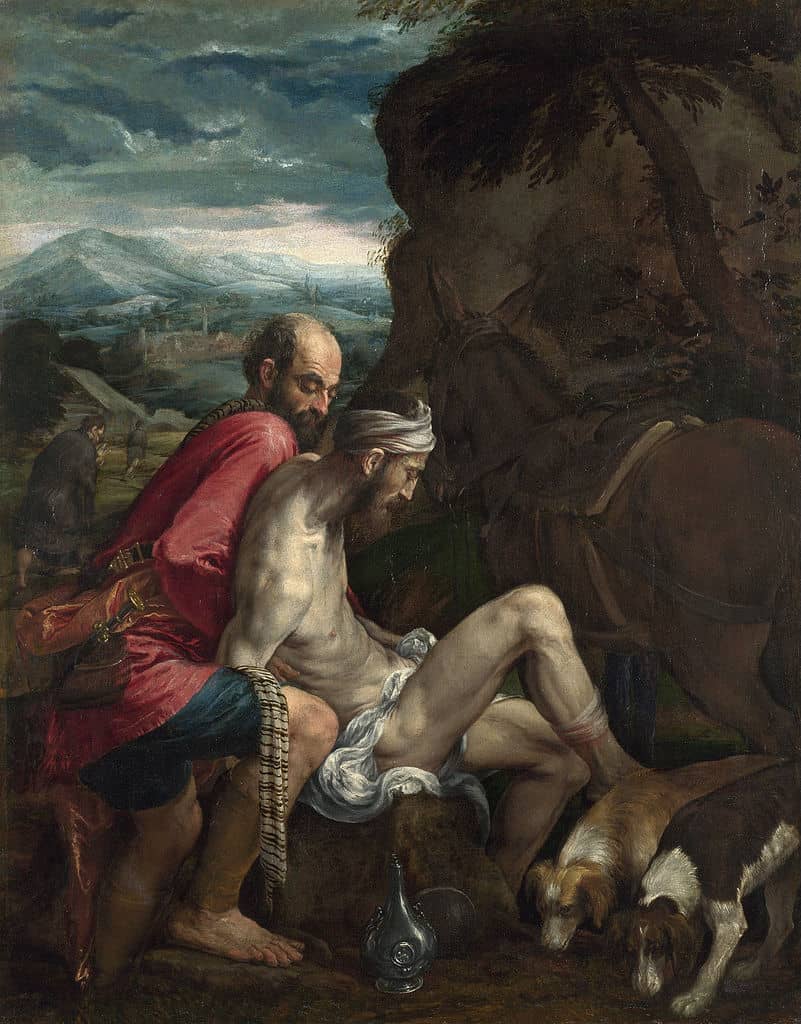
- Verses 25-37 contain the parable of the good Samaritan. The lawyer (an expert in Jewish law and tradition) asking Jesus who his neighbor is was trying to put Jesus to the test. In an ancient Jewish book of wisdom (Sirach 12:1-14), there was a command to not help sinners (you can google this passage!). The lawyer is hoping to narrow down his responsibility of neighborship to only a select few. With His story, Jesus turns this on its head. The priest and the Levite are the expected "good guys" of the story, yet they don't help the half-dead man. Instead, the Samaritan, who the lawyer would view as the renegade, hated "bad guy" is the one who shows compassion to the injured Jew. So, in the end, Jesus turns the lawyer's question around and teaches that instead of worrying about who is and isn't your neighbor, be a neighbor to all who are in need. His point: look beyond the lines the Jews had created, and look at God's vision of the kingdom that extends out to all people.
Chapter 11:
- In the first section of this chapter, Jesus paints the picture of God as a friend who, though he is in bed asleep, will get up to help his friend in need. There is some cultural background information that can be helpful to know here, but mostly, it's important to see that Jesus wasn't trying to convey to us an accurate picture of God's character. He was focused more on the man in need who was willing to go to his friend's house at midnight and wake possibly his whole family to get what he needed - what boldness and shamelessness! What Jesus is pointing to is the importance of persistence in prayer. He is telling His followers to be like the man knocking at his friend's door at midnight because he knows the friend will help - be bold in prayer because the Father longs to give good gifts to His children (v. 11-13)!
- Starting in verse 29, you will start to feel things getting more tense. Though Jesus was spreading a message of hope about the arrival of God's kingdom, many people rejected His message, set on their own ideas of God's kingdom. What Jesus is saying in this section is that when the prophet Jonah confronted the evil people of Nineveh, they listened and repented. Now, Jesus has been calling His people to repent and follow Him, and they are unwilling. Unlike Nineveh, the majority of the Jews will not heed Jesus' warning and will face judgment. Jesus goes on by confronting the Pharisees (v. 42-54), pointing out their pollution and inability to lead people to God.
Chapter 12:
- At this point on the road to Jerusalem, you've read how things are getting more tense as Jesus faces opposition and offers stark warnings to those who do not listen to His message. This whole chapter is a standing rebuke to casually following Jesus. Jesus is calling His followers to devoted discipleship.
- When Jesus tells the parable of the rich fool (13-34), you gain an understanding of why Jesus is worthy of such devoted discipleship: because at the heart of God's kingdom is the creator God who loves His creation dearly. He desires to give the kingdom to all people, to bring His sovereign care and rescue to every person. And it is THIS GOD who is in control of all things. When you understand this, you come to realize why there is no reason to be anxious. If God cares about the smallest details of His creation, then He definitely cares for you and the small details of your life. Jesus tells His followers, "fear not, for it is your Father's good pleasure to give you the kingdom" (v. 32) - how awesome!! When Jesus talks about treasure in heaven, He is not referring to something a person will only have access to after death. He is talking about the immediate treasure that is life-long when you devote yourself to Him - the knowledge that God is in control, cares for you, and is with you in everything!
Some Questions to Consider:
- You read this week about several different healings that Jesus did - healing the centurion's servant, raising the widow's son from the dead, healing the demoniac, the bleeding woman, Jairus's daughter, and the boy with the unclean spirit. In Matthew's gospel account, he records that after healing the centurion's servant, Jesus went to Peter's house, healed Peter's mother-in-law, and many others who were brought to Him. Interestingly, in Matthew 8:17, Matthew records, "This {the healings Jesus was doing} was to fulfill what was spoken by the prophet Isaiah, 'He took our illnesses and bore our diseases.'" Matthew is quoting Isaiah 53:4, a chapter that is usually associated with Jesus' saving work on the cross. Thinking now on both Matthew and Luke's accounts, you may see a pattern. In both His life and His death, Jesus takes on the pollution of sickness, death, and sin - but He transforms these into wholeness, healing, and salvation. He's never been afraid to enter into whatever sicknesses, messes, and sin patterns we've found ourselves in. He comes to us in our dark spots and brings us into the light and into His love. Where do you see in your life the places and times that Jesus has met you where you are and has covered you in light, love, and healing?
- In chapter 9, Jesus asks His disciples who they think He is. Immediately after hearing their answer, He calls them to take up their cross and follow Him, even if this means to the death. Notice this quick movement from beliefs to the call to action. What does this tell you about the kind of relationship Jesus wants with His followers? Can we separate belief from action? Should we have one without the other?
- In chapter 11, Jesus gives us a model for what to pray (the Lord's Prayer) and then tells us how to pray by telling the parable of the man in need waking his friend during the night (with persistence and boldness!). Then, in chapter 12, Jesus explains why there is no reason to be anxious (because God is in control and He cares!). Reflect on your current prayer life. How would the belief that God is in control and truly cares for the small details of your life change the way you pray? I don't mean "belief" in an abstract, intellectual sense, but rather in a true, feel it in your gut, head and heart type belief. Do you really believe that He's in control and He cares for you?
Family Discipleship Considerations:
- In chapter 11, you read a strange parable about the need for persistence and boldness in prayer. If you have children or even if you only occasionally hang out with children, you KNOW they are persistent in asking for what they want. Let this be a reminder to you to have child-like faith and boldness in approaching God in prayer. Additionally, ask the kids in your life to reflect on how they talk to God. If prayer sounds like a scary or confusing concept to them, explain to them that just as they feel freedom to ask mom/dad/grandparent/teacher/etc. for the things they want and need, they can be confident in talking to God the same way. You can emphasize that God desires to hear from them about all things in their life, big and small.
- Now that you've read and reflected upon Luke 12 and Jesus' call to not be anxious, I encourage you to listen to the song "Birds" by Anna Golden. You can find it on YouTube, Spotify, wherever you listen to music! This is a beautiful song to listen to with your family that serves as a reminder of God's provision and faithfulness. Further, things in creation such as the birds of the air and the rising and setting of the sun are great starting points for conversations about God with the little ones in your life. Personally, my two year old gets super excited about simple things like a bird passing by our window or recognizing that the sunset means it is becoming night time. What a perfect opportunity to explain that the same God caring for and sustaining these parts of creation also cares about my daughter's little heart and desires to know her. Even if your children/grandchildren are older, this passage is applicable to the worries and anxieties that any age group faces!
c. 1562-1563 oil painting by Jacopo Bassano - "The Good Samaritan" - based on Luke 10:25-37
|
|
|
|
|
|
Until next time, Baylee L. Brown
"The grace of the Lord Jesus Christ and the love of God and the fellowship of the Holy Spirit be with you all."
2 Corinthians 13:14
|
|
|
|
