|
Week Three: Luke 13-18
It is now the week before Christmas and if you are like me, your schedule is filling up with celebrations and get-togethers, and your list of presents still to wrap is growing longer and longer. Tis the season...right? But if you look beyond all this, take a moment to do a heart check. How are you feeling halfway through the month? Are you resting in the true meaning of this season, finding comfort in taking a few minutes to read Scripture or does it feel like one more thing on your list of to-do's? I just want to give a gentle reminder that God longs to commune with you, and you will never regret making a little space for some solitude and Scripture reading. Whether you've read every day of the month or have missed several days, let's jump back in together this week!
As you read over the next several days, you will continue journeying with Jesus to Jerusalem and all that awaits Him there. This journey started in chapter 12 and goes through chapter 19, so everything you read this week is happening as Jesus is on His way to Jerusalem. Along this journey, you'll read more about the nature of God's kingdom, of true discipleship, and of the wayward place Israel had found herself in.
Warning: you are going to read A LOT of parables this week. In these chapters, Jesus is almost constantly teaching those around Him through parables. Keep in mind that while parables can sound like good "moral," surface-level advice, there is always a deeper meaning usually relating to what God is doing in the world through Jesus.
As always, below are some helpful things to know, some questions to ponder, and some ideas for involving the loved ones in your life in this reading plan. If you need to go back to previous weeks, you can find the introduction to the reading plan here, the notes from our first week of reading together here, and the second week here.
Helpful Things to Know:
Chapter 13:
- The chapter begins on a somber note with people coming to tell Jesus that Pilate, the Roman governor of Judaea, had murdered some Galileans in the Temple when they came to visit. Being on His way to the Temple Himself, this isn't merely neutral information. These messengers have got to be thinking, "surely Jesus will not continue to Jerusalem and risk being murdered, right?" Jesus responds by explaining that there will be many more to perish if they do not heed His call and repent. He explains through the parable of the barren fig tree that the people of Israel have had plenty of chances to change direction and follow God once again. While some have chosen to accept Jesus, the majority have rejected Him. They have one more chance, but if they still refuse Jesus' message, their fate is sealed and they will face God's judgment.
- With all of Jesus' talk of judgment coming upon Israel, you may find yourself imagining that He is angry at the people around Him or has run out of patience and is ready to strike them all down. The end of this chapter reminds you that this is not the case. As the Pharisees (probably gladly!) let Jesus know that Herod wants to kill Him, Jesus compares Himself to a mother hen who will give her life in order to save the lives of her baby chicks. This is a strong statement that gives us insight into how Jesus understands the meaning of His upcoming death. Though Jerusalem has rebelled against God for centuries, Jesus longs for them to re-consider and choose the way of peace. He knows that going to Jerusalem will mean His death and that the Jewish people will not be innocent in His going to the cross. YET, He still longs to gather them up, protect them, and usher them into the Kingdom if they'd only repent.
Chapter 14:
- In chapter 14, you find two parables back-to-back that are centered around the theme of feasting with others. The first parable is a warning against pushing yourself forward in the eyes of God - a warning against pride. The Pharisees were all too happy to show off their close keeping of the law, their supposed superiority over the poor, those who did not study the law, and the "sinners." As will be a common theme over the next few chapters, Jesus hints at the humility that is necessary in the lives of those who follow Him. The second parable goes a step further in poking a finger at the nation of Israel: like guests that will not come to a feast because they have better things to do, the people of Israel have refused Jesus for various reasons despite His being the Messiah they had long been awaiting. Instead of the religious leaders and the rest of Israel accepting Jesus' invitation to the Kingdom, it has largely been an unexpected group - Gentiles, "sinners," women, outcasts, the poor, the disadvantaged, etc.
- The chapter ends with Jesus telling the great crowds around Him that discipleship means sacrifice and loyalty - even if it means one's death or putting aside family in order to follow Him. Jesus is not denying the value of life or of family relationships. He is pointing to the importance and urgency of accepting His call - one's decision about the Kingdom of God must trump all things. If this sounds scary or like too much, Jesus says this is like starting to build a tower but running out of money, or starting a war against a much bigger enemy. Interestingly, Jesus follows this speech up with a reminder of Israel's call to be the salt of the world. If Israel can't be the Israel that God called them to be, where are they left? A tower destroyed (the devastation of the Temple) and a lost battle against a large enemy (the Romans) - all of which occurred just a few decades later in AD 70.
Chapter 15:
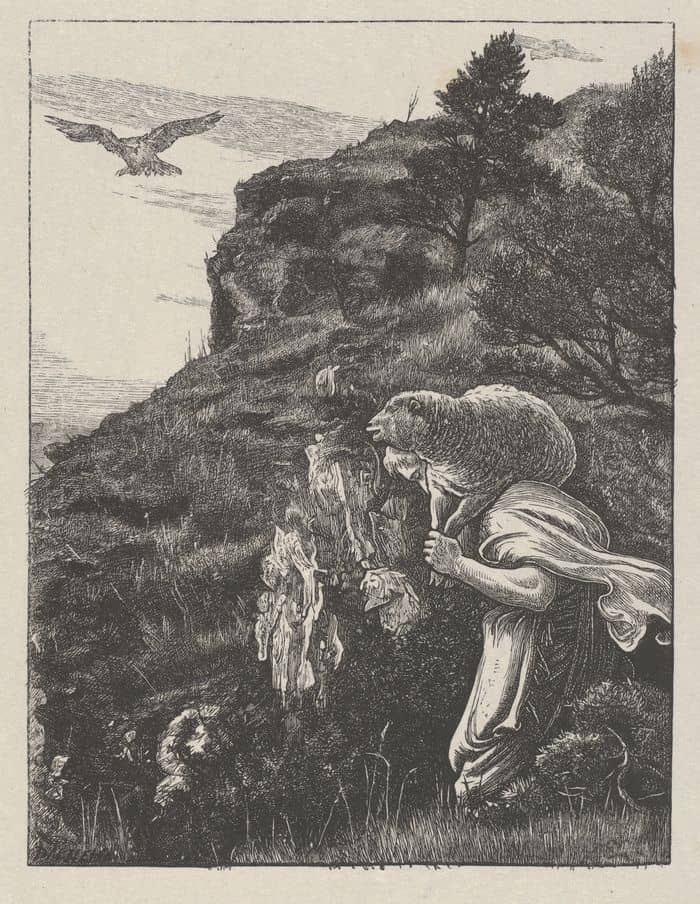
- You'll find in chapter 15 some of the most well known parables of Jesus: the parables of lost sheep and lost coins, and the parable of the prodigal son. In the first two, the only thing unique about the lost sheep and the lost coin is that they are, in fact, lost. What Jesus is communicating here is that for anyone - ANYONE - who accepts His invitation to repent and follow Him, there is a celebration in Heaven. Jesus is like a shepherd who loves to rescue His lost sheep; He is like one who is overjoyed that He has found His lost coin. A repentant sinner does not have to do anything or be anything special to make Jesus love or accept him.
- This theme of celebration over a sinner coming home continues with the well-known story of the younger son demanding his inheritance, disgracing his father, and hitting rock bottom - but then having a loving, celebratory reunion with his father when he came home. At the lowest point in this son's life, there was nothing about him to impress his father or make himself worthy of being accepted again. The father welcomed him home simply because he was his. In the same way, repentant sinners have nothing to offer God in terms of godliness on their own, yet God loves them, accepts them, and celebrates at their homecoming.
- It is the older brother in the parable of the prodigal son that provides Jesus' response to His critics. While there were many unexpected sorts of people that accepted Jesus' call throughout His ministry, it was the Pharisees and religious leaders that couldn't get past Jesus' involvement with "sinners," couldn't possibly accept that Jesus could actually be the One they'd waited for. What Jesus is making clear is that it was not God closing the gates on them - it was their own prejudice and pride keeping them from God's love. As you saw in Jesus' grieving over Jerusalem, still here, Jesus longs for even those with the hardest of hearts to repent and turn towards Him.
Chapter 16:
- Chapter 16 talks a lot about money, but is not merely a lesson on how to (and not to) use one's money. Looking beyond this, you can see that it is a deeper issue: faithfulness. Jesus is calling His followers to faithfulness not just in wealth, but in all things. God entrusts much to us: the people He's called us to love, the vocations we have, the possessions we care for, etc. As soon as we start to see any of these as truly ours and no longer as things we are called to steward, we are in dangerous territory. Going back to the original context, had Israel been a good steward, had they been a light to the rest of the world, making the one true God known?
- Verses 19-31 make up a parable that was a common tale in the ancient world. Jesus was definitely not the first to tell a story about wealth and poverty, and how they relate to life after death, but He did give the story a major, unexpected twist. In fact, beyond the appropriate lessons of riches and poverty and stewardship found in this story, you can also see that Jesus is once again making a point to the Pharisees. Look especially at verses 27-31. The Pharisees have rejected Jesus' message of the Kingdom, yet all He is asking of them is to look back at the Law and the Prophets, to see that He is who Moses and the prophets were looking forward to. The Pharisees were known for their expansive knowledge of what we call the Old Testament, yet they were blinded to the fact that Jesus is the Anointed One the Old Testament prophecies were about! Jesus' last words of the section are haunting: "if they do not hear Moses and the Prophets, neither will they be convinced if someone should rise from the dead." Jesus' resurrection is exactly what is about to happen, and yet, this will still not be enough for many in Israel to come to believe.
Chapter 17:
- The first 19 verses in chapter 17 can seem strung together without much thought, but if you look closely, you'll see this theme of humility. Repeatedly, but in different ways, Jesus reminds His listeners of the importance of humility in a believer's life. One who is humble is less likely to test or tempt another (v. 1-2). One who is humble will not keep a mental score of how many times a person messes up, storing ammunition for the next time they do something wrong (v. 3-4).The heart of the matter is that everything one does should be done from a place of gratitude and humility, rather than trying to earn something (v. 7-10).
- In verse 20, the Pharisees ask Jesus when the Kingdom of God would arrive, as if they were looking for a specific timeline or order of events. Jesus' answer to the Pharisees has often been interpreted as referring to an end-times event. Another interpretation is that Jesus is warning those around Him what will happen in the near future for those who continue to reject His message of the kingdom. History tells us that Jerusalem faced major destruction at the hands of the Romans just a few decades after Jesus' death as a result of the Jews rebelling against Rome. Jesus speaks of the "days of the Son of Man," likely referring to the Son of Man that Daniel prophesies of in Daniel 7:13-14. This will be a time when Jesus is vindicated by God and judgment is passed on those who opposed Jesus and His message.
Chapter 18:
- The theme of vindication (or justification, to use the Apostle Paul's language) continues in the first two parables found in chapter 18. The parables are a reminder that God is a God of justice who cares deeply for His people. At the end of the day, God will ensure there is justice - both for those who lived faithful lives unto Him, and for those unwilling to accept Christ's call of the kingdom.
- Chapter 18 wraps up with Jesus telling His disciples for the third time about His upcoming suffering and death, and then going on to heal a blind man with great faith. Luke had an interesting way of arranging these two moments. On the one hand, you see how the forces of evil are about to come upon Jesus as He draws near to Jerusalem. Through His death, Jesus takes on all the evil of the world so that the world doesn't have to. On the other hand, you see how Jesus is already ushering in God's kingdom, healing, and giving new life. In these back-to-back accounts, you see both life and death. How do these fit together? Look at verse 31: "everything that is written about the Son of Man by the prophets will be accomplished." Everything that was happening, both the good and the evil, was a fulfillment of what the Old Testament prophets had been looking forward to. Yes, Jesus was about to suffer, but it was through His suffering, death, and resurrection that the kingdom of God was able to break through and begin to spread.
Some Questions to Consider:
- At the end of chapter 13, Jesus was grieving over Jerusalem, desiring for the people to listen to His message, repent, and follow Him, but knowing that many of them wouldn't. In chapter 15, Luke records two of Jesus' parables both centered on the theme of celebration and joy when a sinner chooses to repent. In both chapters, you can see the powerful human emotions that Jesus embodies, how He longs for people to enter into relationship with Him. Reflect on what you think Jesus' attitude towards you is like. Does it match up with the pictures that Luke paints in these two chapters? Do you think of Jesus as merely tolerating your presence in the Kingdom, of "loving" you, but not "liking" you? Whatever comes to mind, bring this before God in prayer, and ask Him to help you understand His love for you (Ephesians 3:16-19).
- The parable of the dishonest manager found in chapter 16 is the most difficult parable in all of Luke's gospel to interpret. Scholars have looked at this parable from various angles and often walked away with different conclusions on its meaning. One thing that seems clear, without getting into the nitty-gritty, is that the resourcefulness of the manager was applauded by his master. So, you can see a theme emerging from both this parable (v. 1-9) and what Jesus has to say following it (v. 10-13): be resourceful and faithful in the things you have been given to steward. As I mentioned above, this doesn't just mean "stuff." Take inventory in your life and reflect on all the things God has given you to steward: your loved ones, your skills and talents, your vocation, your finances, etc. How can you use what God has entrusted to you to further His kingdom? How can you surrender these to Him, recognizing they are not yours, but rather something for you to steward and care for for the glory of God?
- In chapter 18, you read about how, as Jesus approaches Jerusalem, good and evil are getting ready to collide. Jesus knows of the evil that He must overcome and what He must suffer when He arrives. But along the way, and all throughout His ministry, Jesus has been showing the first fruits of the Kingdom of God, bringing life, light, and love to those who are willing to accept His message of peace. You read how both of these strands came together in Jesus explaining to His disciples that everything that was happening was to be a fulfillment of the Old Testament prophets - everything was happening for a reason. In our own lives, it can be difficult to hold the good and bad hand-in-hand, to experience joy and grief simultaneously. Yet it seems that this is what we are called to do for a large portion of our lives. Reflect on this in prayer - how can you both celebrate the big and small ways the Kingdom is taking root in your life, while also grieving the brokenness of this world we still live in? What confidence and assurance does it give you that, though you still live in brokenness, new life is breaking in and Jesus has secured the ultimate victory through the cross?
Family Discipleship Considerations:
- This week, there were multiple passages that highlighted the importance of humility: the parable of the feast in chapter 14 and the assorted teachings at the beginning of chapter 17. Humility is not only an important virtue to teach our children, it's also a hard virtue for us to learn as adults. Thinking specifically in the context of marriage, please tell me I'm not the only one that has been guilty of keeping a mental score of how my husband "always" does X, Y, or Z (if you go to Grace, you know that Pastor Jeff recently confessed to this in last week's sermon as well, so I know I'm not totally alone in this!). At the heart of this issue is my pride - it's easier for me to hold something over my husband's head than it is to admit that maybe I'm part of the problem as well. I won't pretend to have the answers on how to fix this, but here are some considerations: can we maybe just make a rule to never say "always" and "never" in conflict? Can we think of some practical ways to love our spouses and children that help us practice humility and putting the needs/wants of others above ourselves?
- There are lots of statistics to be found today about the number of young people that are leaving Christianity behind as soon as they gain some independence. There are even more statistics and theories on why this is the case. As I reflected on this, one thing that came to mind was the words of Jesus in 14:25-33. In this passage, Jesus is talking about the seriousness of discipleship - to follow Him will be costly and sometimes risky. Maybe, just maybe, one reason young people are leaving the church is because we haven't always framed the Gospel in the most helpful way. We don't want our young people to be like the tower builder, building without a foundation, only to walk away unfinished later, or like the king going to war who doesn't consider what he will be up against. Instead, we need to be real with them, letting them know that as Christians, we will face difficulties, go through trials, make costly decisions in the name of our faith, etc. But just as importantly, we need to be able to communicate the Gospel in a way that captures the goodness, the joy, the strength, and the peace that is gained from following Christ. Nothing we could ever leave behind will compare to all the riches we have both now and ahead of us in Christ.
c. 1864 wood engraving (so impressive!) by Sir John Everett Millais (artist) and Dalziel Brothers (engravers) - "The Lost Sheep (The Parables of Our Lord and Savior Jesus Christ)" - based on Luke 15:3-7
|
|
|
|
|
|
Until next time, Baylee L. Brown
"The grace of the Lord Jesus Christ and the love of God and the fellowship of the Holy Spirit be with you all."
2 Corinthians 13:14
|
|
|
|
