|
Week Four: Luke 19-24
As usual, the month of December has flown by and it is already our last week of reading together. We read the traditional Christmas passages weeks ago, and now, as we make it to the week of Christmas, we'll be reading of Jesus' arrest, crucifixion, burial, and resurrection. That doesn't seem like a typical Christmas reading plan, does it??
Let this be a reminder of two things: (1) We are invited to celebrate in Jesus' birth because He really is who He said He was. If He wasn't the Messiah that died and rose from the grave, we'd have no reason to celebrate His birth. Though our readings can be tough to swallow this week, it is exactly through this darkness that the light of God's salvation breaks through. When we hold the light and dark hand-in-hand, we see all the more reason to celebrate the light. (2) Some of us may not feel like things are "merry and bright" right now. In fact, this time of year can often bring to the front of our minds the hurts and disappoints experienced throughout the year. Remember that whatever you're facing has already lost its power because of the cross. It likely stings now, but know that because Christ came as a human like you and I, and was victorious on the cross, the hardships you are going through do not get the final say.
With that in mind, let's celebrate the advent of Jesus Christ this week by opening our Bibles and praising Him for all He has done for us. If you haven't had a chance to read much Scripture this month, don't let that stop you from jumping in this week. This is an invitation to ponder and reflect on the great love of God that He'd come in the flesh into this broken world in order to redeem us.
Below are some helpful things to know, some questions to ponder, and some ideas for involving the loved ones in your life in this reading plan. Here are the links for previous weeks: Intro to reading plan is here, Week One notes are here, Week Two notes are here, and Week Three notes are here.
Helpful Things to Know:
Chapter 19:
- After many chapters detailing Jesus' journey to Jerusalem, He reaches His destination mid-way through chapter 19. This is it - Jesus has made it to the Holy City and things are about to start happening in rapid succession as Jesus nears the time of His crucifixion. Though the following chapters are, for the most part, very dark and solemn, the account of the triumphal entry (v. 28-40) is a reminder of Jesus' true status as the King of the Jews - and the world. If you look closely, the way that Luke describes Jesus entering Jerusalem echoes back to several Old Testament passages: it is a direct fulfillment of Zechariah 9:9, it is reminiscent of the laying down of garments that was done for King Jehu in 2 Kings 9:13, and the entrance that Solomon made as the new king in 1 Kings 1:38-39. What God is doing through Jesus is not disconnected from everything that has come before. The Old Testament has always looked forward to the Messiah you see here, coming humbly into the city, ready to face the forces of evil and take on the sins of the world.
- At the end of chapter 19, in just a few verses (v. 41-48), you see a picture of Jesus' heart towards those of Jerusalem. Throughout His ministry, Jesus has warned the people about the need to repent in order to avoid God's judgment. At no point has He done this out of anger or an attitude of gloating over the coming destruction. Instead, as Luke details here, Jesus is heartbroken and, in spite of all that has happened so far and all that He knows will happen to Him in the week ahead, He weeps for those who will reject Him. The matter of cleansing the Temple then is not an emotional protest, but rather a prophetic warning: the Temple has become corrupt and, as a result, will come under the judgment of God.
Chapter 20:
-
In this chapter, Luke quickly covers four debates that Jesus has in the Temple with various groups of religious leaders. Here's a quick glimpse at what these debates were about:
- Jesus' authority: the chief priests, scribes, and elders asked Jesus by what authority He was teaching and preaching. Instead of answering their question, He asked if John the Baptist was from heaven or from man. When they could not answer, Jesus told them the parable of the tenants which had an obvious lesson for the religious leaders: though Israel has rejected those whom God has sent, including Jesus Himself, God will judge and destroy those who do not turn to Him. Jesus then quotes Psalm 118:22, driving home His point that though He may be rejected now, it will become clear to everyone that He is the true Messiah.
- Taxes to Caesar: This question was supposed to trick Jesus. If He said to not pay taxes, He must be a true revolutionary who deserved to be arrested. If He said to pay taxes, then He wasn't a true leader that would rescue the Jews from the Romans. Once again, Jesus turned the tables on them by advising them to give to Caesar what belongs to him, and to God what belongs to Him. His point: many of the Jews had failed to give to God what belonged to Him, failed to properly worship Him, failed to be a light to the world. If they would get that figured out, the issue of Caesar would sort itself out.
- Marriage and Resurrection: The Sadducees, a group of religious leaders who did not believe in the possibility of resurrection, tried to trick Jesus on the matter of resurrection. He made two points: First, after the resurrection, our bodies will be different in significant ways that are appropriate for the new world where death no longer exists. Second, Jesus uses a passage in Deuteronomy to prove His point that there will be a resurrection where those who have died will be alive again in the new creation.
- David's Son and David's Lord: Unlike the previous debates, Jesus initiates this one. His goal was to show that the Messiah that the Jews had been waiting for was even more than they had expected. While they had expected a human king to fight their battles and restore the Temple, Jesus goes far beyond these expectations as the embodiment of God Himself.
Chapter 21:
- For most of this chapter, Jesus is warning those around Him once again about the judgment and destruction that fall upon those who do not heed His call and repent. You can find both short-term and long-term fulfillment in Jesus' words here. Much of what He says is relevant to the destruction that Jerusalem faced at the hands of the Romans in AD 70. Looking beyond that, Jesus is likely also telling of events that will occur when the Son of Man returns at the end of time. Luke is not the only gospel author to record Jesus' discourse here, but of the gospel authors, he is the most focused on the short-term fulfillment where the Jews will suffer greatly just a few decades after Jesus' death and resurrection.
Chapter 22:
- This is a full chapter with many details about Jesus' last evening with His disciples before going to the cross. The evening started with Judas getting away from the group to go and betray Jesus to the religious officials. The betrayal will be based on a lie: Jesus is not some rebel hero wanting to overthrow the Romans, but He will be accused of such because the religious leaders know that this will get Him killed at the hands of the Romans. In spite of these accusations, Luke will tell us over and over again in different ways how Jesus is completely innocent of the charges that were laid against Him.
- During the Passover meal, Jesus institutes what is known as the Lord's Supper, reminding them of the suffering He was about to experience and giving them a sacrament to remember Him by. All throughout this passage though, you see how the disciples do not understand. If they did, they wouldn't have been arguing over who was the greatest among them. In Jesus' response, notice two things: (1) Jesus Himself leads the way in the call to be a servant. In this passage, He stands greatness on its head, making it clear that servanthood is the path to greatness; (2) Jesus promises the kingdom to the disciples in spite of their confusion and lack of understanding. This promise is not contingent on their understanding or even their perfection (after all, Peter is just about to deny Jesus). Instead, the promise rests in the faithfulness of God and His ability to work things for good in spite of human failure.
Chapter 23:
- Verses 1-16 form an interesting account of the encounter between Jesus, Pilate, and Herod that is unique only to Luke's gospel. Only Luke tells his readers back in chapter 13 that Herod wanted to find Jesus and kill Him during His Galilean ministry (13:31) - and now, only Luke records Jesus and Herod finally meeting face-to-face. As Jesus was questioned, accused, mocked, and treated with contempt, He stood silent. Even Pilate could see that Jesus was falsely accused by the religious leaders, but because of pressure from the crowd, he was willing to send Jesus to His death.
- Luke begins his gospel by telling Theophilus that he is writing an orderly account so that Theophilus may be certain about the events that have occurred surrounding the Person of Jesus. Now, at the end of chapter 23, you can see the orderliness of Luke's account. One by one, he records a string of people that were witnesses to Jesus' death and burial: the Roman centurion, the surrounding crowds, Jesus' followers, and the women. Luke wants his readers to be certain about the facts of Jesus' death and burial. The One who spent years announcing the kingdom, healing, and teaching is the same One who was crucified and buried - and, as you will see in the next chapter, was resurrected. The Jewish religious leaders may have tried to make up stories to explain away Jesus' miraculous resurrection (Matt. 28:11-15), but Luke wants his readers to have confidence in what truly happened.
Chapter 24:
- Verses 1-12 make it clear that the disciples cannot fathom the resurrection of Jesus. In Jewish thought, the concept of resurrection was not something that happened to a single person, but rather was a future event where all the righteous dead would be collectively raised again someday and given new life by God. Even though Jesus had been warning the disciples from chapter 9 and onward of His upcoming death and resurrection, this was still a challenge for them to wrap their heads around.
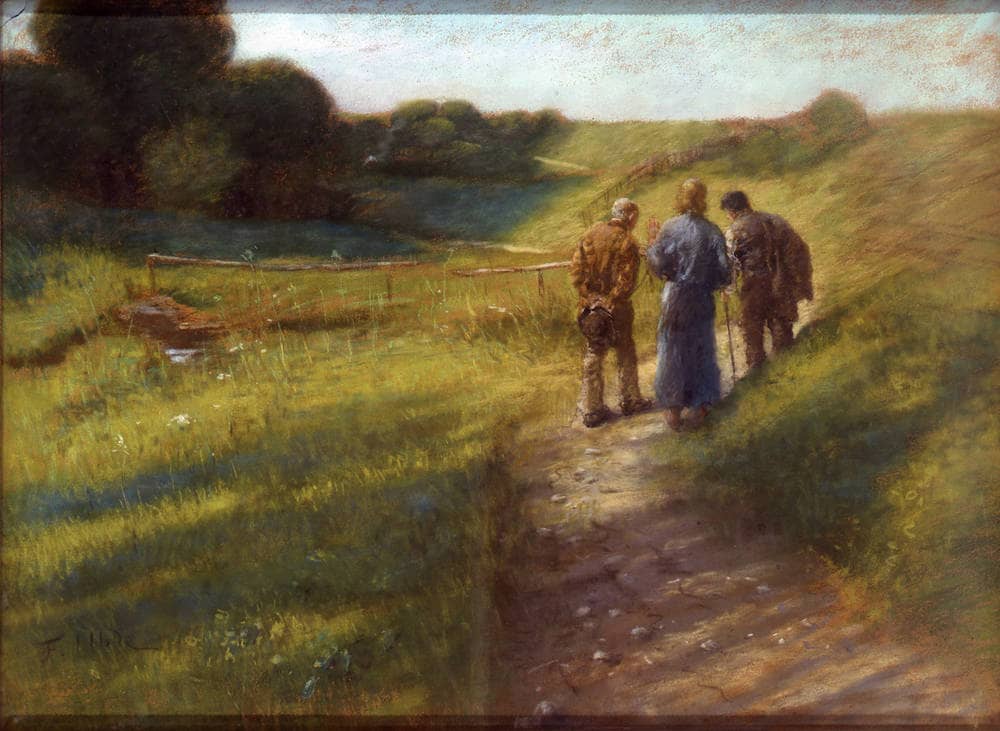
- The account of Jesus meeting two of His followers on the road to Emmaus is a wonderful scene that captures His mission after being resurrected. It was apparent to Jesus that the two followers, as with the rest of Israel, needed a fresh understanding of how God was redeeming the world. Israel had been looking for God to redeem and rescue them from their suffering, yet Jesus showed these followers that God was in fact rescuing Israel through the suffering of the Messiah. Jesus didn't merely choose a few proof texts from the Old Testament to make His point - He explained the whole story, from beginning to end, in a way that made it clear that all God had done before had lead to this point where Jesus took on the sin of the world and made a way for God's new creation to break through.
- Luke ends his gospel with the account of Jesus appearing before His disciples and showing them that He was truly risen, truly alive. He goes on to commission the disciples to go out into the world to proclaim all the things they've witnessed once they have received the Spirit (detailed in the book of Acts). Jesus explains to them that everything written about Him throughout the Old Testament must be fulfilled - and this includes their call to go into the nations and proclaim His name! Jesus' death was not a bump in the road of God's great plan, but rather had been the plan all along! The final scene is one of beauty as Jesus blesses the disciples and ascends to heaven. The disciples return to the Temple in Jerusalem to praise God for all that has happened.
Some Questions to Consider:
- In chapter 19, you read of Jesus' triumphal entry into Jerusalem, riding on a humble donkey. This event is captured in all four gospels. While Luke highlights how the disciples praised God as Jesus came riding in, the other gospel authors capture how the crowds at large spread their cloaks along Jesus' path and waved palm branches, saying, "Hosanna to the Son of David!" Interestingly, just days later, the same crowds were yelling for Jesus to be crucified (Matt. 27:15-23). So easily was their allegiance swayed. Reflect on this question from theologian N.T. Wright, "Are we ready not only to spread our cloaks on the road in front of Him, to do the showy and flamboyant thing, but also now to follow Him into trouble, controversy, trial and death?" What comes to mind as you read this?
- While it was the Jewish authorities and religious leaders that wanted Jesus dead the most, it was ultimately Pilate, the Roman governor of Judea, who determined whether He was crucified or set free. Interestingly, Pilate did not find grounds for Jesus to be crucified, but gave into the pleas of the crowd. If you look at 23:13-25, you'll see that the crowd chose for Barabbas, a man guilty of leading a rebellion against Rome, to be released and for Jesus to die. As a result, Jesus ends up dying the death of a rebel in place of the true rebel. In this account, we are invited to see ourselves in the person of Barabbas. We hear the phrase, "Jesus died for our sins" over and over as Christians, but reflect on that for a bit. Go beyond the big, impersonal word, "sin." Take some time to think about how Jesus, in the greatest act of mercy, went to the cross for the big and small ways we turn our face away from His day after day. Do you start to feel shame...or love and thankfulness for your Creator? Whatever your feelings, bring those before God in prayer.
- You read twice in chapter 24 about Jesus spending time with people, explaining the Scriptures in a way that highlighted how He was the fulfillment of everything that had come before. In fact, as the followers on the road to Emmaus realized who Jesus was, they said, "Did not our hearts burn within us while he talked to us on the road, while he opened to us the Scriptures?" Just like these followers, we are invited to approach the Bible with fresh eyes, to allow our hearts to burn within us as the truth of God's Word comes alive for us. How do you currently feel about reading the Bible? Does it feel like a have-to or a get-to? Is it something that excites you? Intimidates you? Ask God to open your eyes to the beauty of His Word, to make you excited about discovering and re-discovering the great story found within its pages.
Family Discipleship Considerations:
- When I was a kid, there was a woman in my church who wanted to organize a Triumphal Entry for the kids to take part in during Children's Church the Sunday morning before Easter. She found old-fashioned cloaks for some kids to lay on the road, palm fronds for other kids to wave around, and even secured a donkey for someone to ride on. So, that Sunday, as the adults were in service, all of us kids were outside our country church, learning in a new way about how Jesus came into Jerusalem all those years ago. To my knowledge, she only did this one year - but amazingly, I still vividly remember it more than twenty years later. The story of Jesus riding into Jerusalem as the true King came alive to me that Sunday morning. As a kid, I didn't understand all the details about the passage, but I loved it because, in some small way, I got to take part in that story. I've been thinking about something as a result of this memory: The more we can make Scripture come alive to children (and adults!), helping them see themselves in the story, the more likely they are to hide that truth in their hearts, to continue thinking about it long after the reading time is over. This may not mean we've got to act out all the Bible stories, but it is an encouragement for us to be good storytellers, for us to know and love the Word enough that we will consider creative ways to teach those around us.
- In chapter 23, you read of all the witnesses to Jesus' death. Above, I talked about how this seemed intentional: from the beginning, Luke has tried to give an "orderly account" of everything that happened so that his readers could have confidence in these things. Luke is by no means asking his readers to have a "blind faith". He wants to give them evidence to back up their beliefs about Jesus. Not only was this important for Luke's original audience, but it is also incredibly important for us today. There are many rational reasons for us to believe in the tenants of Christianity. Consider whether your faith in God is a "blind faith" or if you are readily able to "make a defense to anyone who asks you for a reason for the hope that is in you" (1 Peter 3:15). One of the greatest gifts we can give ourselves, our children, our spouses, and our loved ones is the gift of studying the evidence for the Christian faith. When you study the evidence for Christianity, you gain more confidence in your faith and can help your loved ones gain that confidence as well.
c. 1891 pastel painting by Fritz von Uhde - "Walking to Emmaus - based on Luke 24:13-35
|
|
|
|
|
|
Until next time, Baylee L. Brown
"The grace of the Lord Jesus Christ and the love of God and the fellowship of the Holy Spirit be with you all."
2 Corinthians 13:14
|
|
|
|
